The Special Relationship: Born at Westminster College and Still Passing the Test
by Timothy Riley
Sandra L. and Monroe E. Trout Director and Chief Curator
Few phrases in modern diplomacy have carried greater meaning than the “special relationship” between the United States and the United Kingdom. Winston Churchill gave those words lasting prominence on March 5, 1946, when he delivered his historic “The Sinews of Peace” address at Westminster College in Fulton.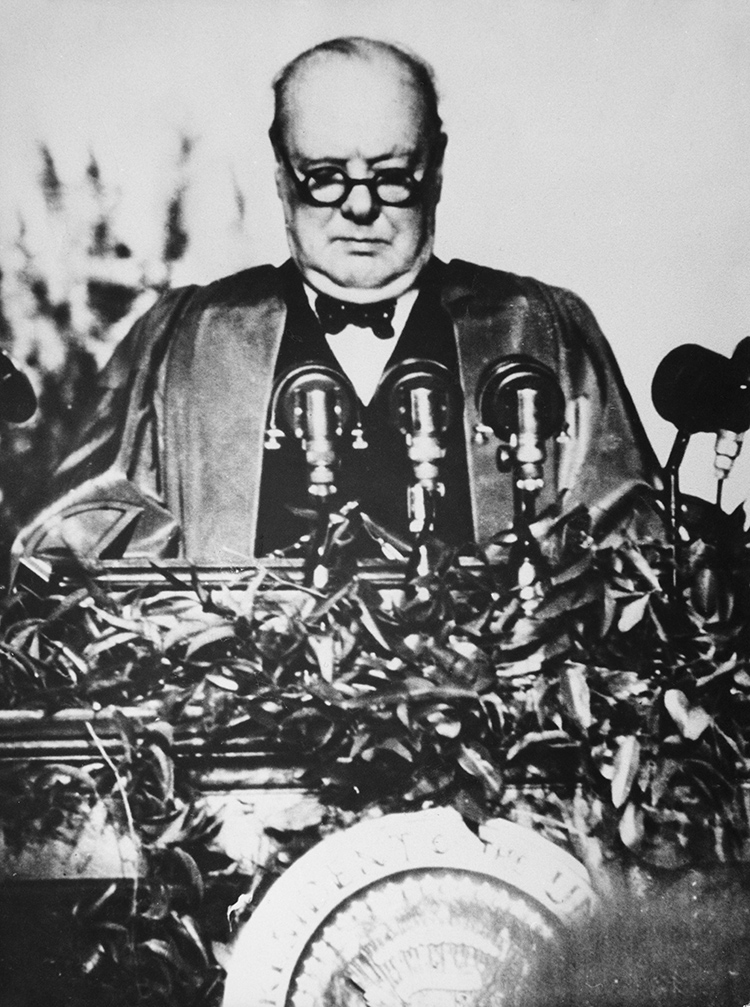
He made it a key element in his address:
“I come to the crux of what I have traveled here to say.
Neither the sure prevention of war, nor the continuous rise of world organization will be gained without what I have called the fraternal association of the English-speaking peoples. This means a special relationship between the British Commonwealth and Empire and the United States.”
Speaking in the uncertain aftermath of the Second World War, Churchill called for closer cooperation between the English-speaking democracies to preserve liberty, maintain peace, and confront emerging threats. For Churchill, he was emphatic and specific.
“This is no time for generalities, and I will venture to be precise.
Fraternal association requires not only the growing friendship and mutual understanding between our two vast but kindred systems of society, but the continuance of the intimate relationship between our military advisers, leading to common study of potential dangers, the similarity of weapons and manuals of instructions, and to the interchange of officers and cadets at technical colleges. It should carry with it the continuance of the present facilities for mutual security by the joint use of all Naval and Air Force bases in the possession of either country all over the world. This would perhaps double the mobility of the American Navy and Air Force.”
Churchill believed a UK-U.S. military alliance, which, for him, included a high degree of intelligence sharing, was essential to the future stability of the world. It was a bold vision—one rooted in shared language, legal traditions, democratic institutions, and common ideals.
Eighty years later, that vision remains relevant. The partnership between the 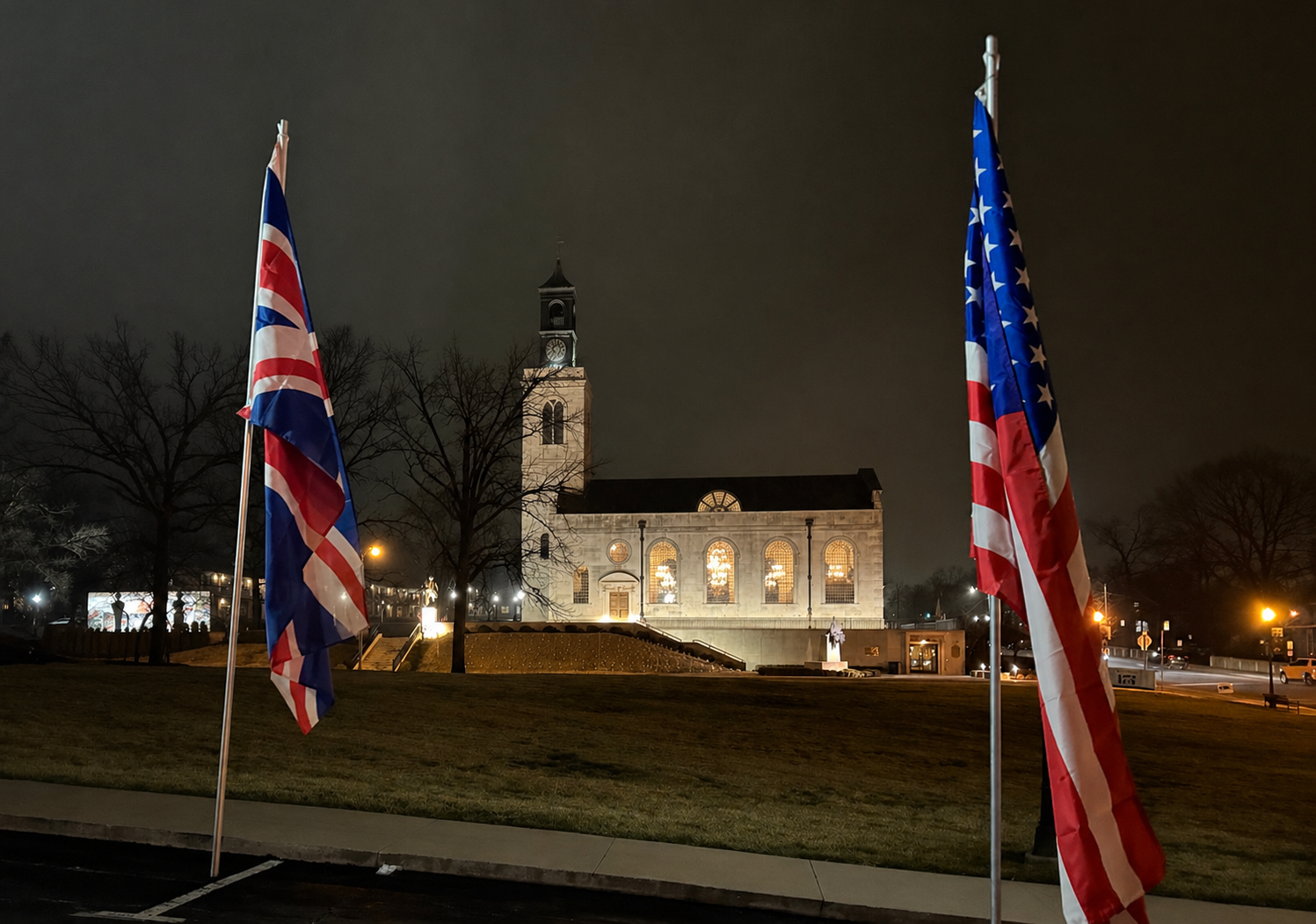 United States and the United Kingdom has helped shape the modern world through defense cooperation, intelligence sharing, trade, diplomacy, and a steadfast commitment to democratic values.
When tested—as it is from time to time—the special relationship always passes the test.
No place symbolizes the special relationship more powerfully than America’s National Churchill Museum. Located on the Westminster College campus where Churchill delivered his famous address, the Museum preserves Churchill’s legacy and articulates it for a new era. At its heart stands St. Mary Aldermanbury, the historic London church designed by Sir Christopher Wren and painstakingly rebuilt stone by stone in Missouri after the Blitz. That venerable building, like the special relationship itself, stands as a testament to resilience, perseverance, and enduring hope for a more peaceful future.
“Leave the past to history especially as I propose to write that history myself.”